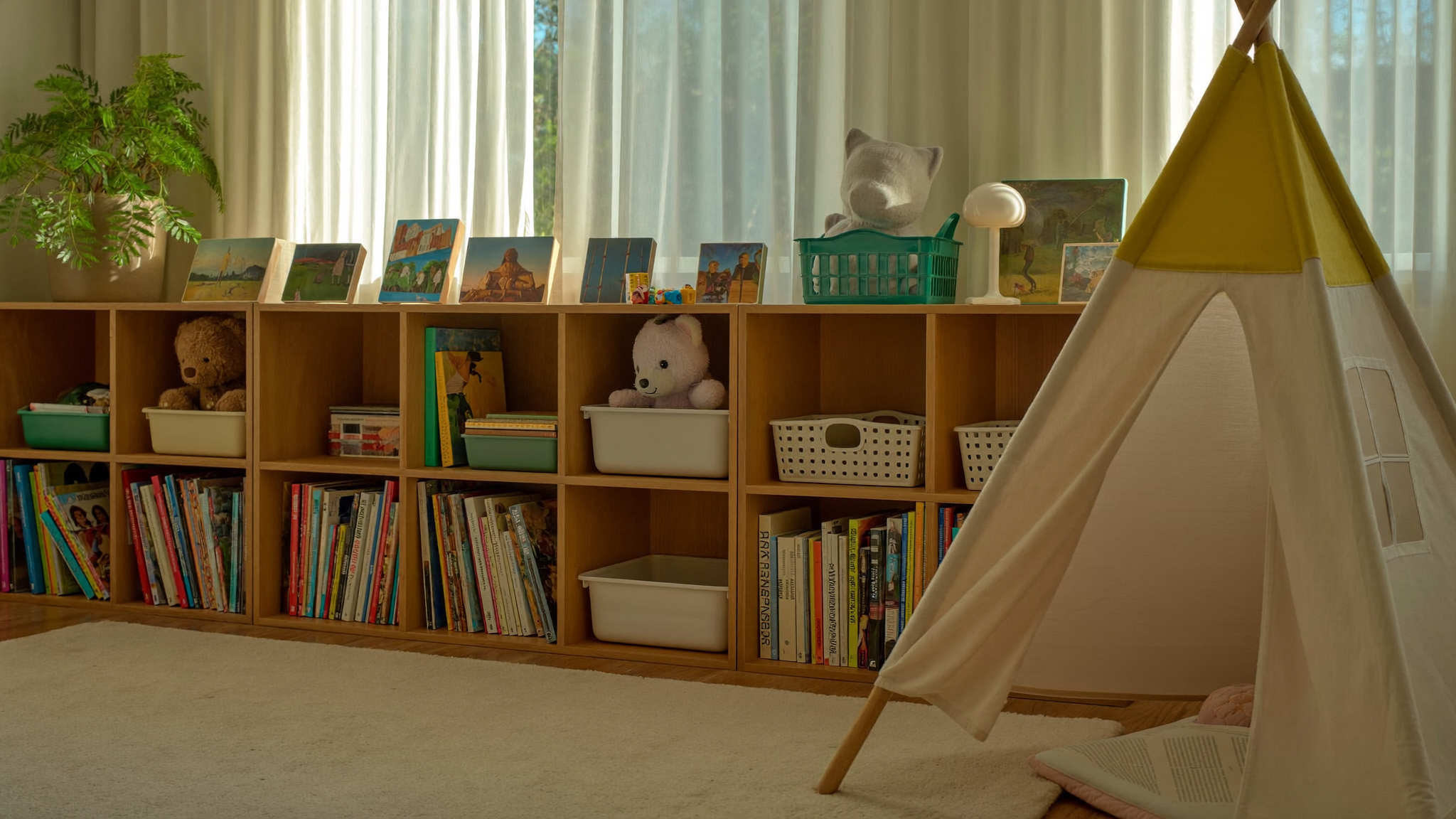
Ask a toddler what makes somewhere feel safe and you won't get an answer — but watch one for a week and you will. Familiar faces. Predictable routines. Quiet corners to retreat to. A licensed home daycare offers all three by design, because the environment is a home. At KinderPath Consulting we've walked through hundreds of these homes across the GTA, and the best providers share a set of practices worth understanding before you choose care.
The environment is not a backdrop — it's part of the care
A child care centre is purpose-built: bright rooms, durable surfaces, institutional furniture scaled for groups. There's nothing wrong with that, but it's a fundamentally different sensory experience from a living room with a soft rug, a family kitchen table, and afternoon light through real curtains.
For young children — especially infants, toddlers, and sensitive or shy kids — the home setting means fewer transitions, less noise, and an atmosphere that mirrors the place they already know best: their own house. Less energy spent coping means more energy available for playing, exploring, and learning.
Seven practices behind a genuinely nurturing home daycare
1. Small numbers, real attention
With no more than six children in care, a licensed provider can actually respond to each child as an individual — adjusting an activity for the toddler who needs more challenge, sitting a moment longer with the one who's struggling with drop-off. Parents routinely tell us their provider knows their child's signals better than some relatives do.
2. One caregiver, every day
Attachment isn't built through programming; it's built through repetition with the same trusted adult. The provider who greeted your child Monday is the one who knows why Thursday was rough. That continuity shows up as easier drop-offs, steadier moods, and a braver approach to new things.
3. Spaces that feel lived-in, not installed
Real couches. A basket of books beside a window. Naps in a quiet room with soft lighting rather than a hall of cots under fluorescents. None of this is decoration — familiar, comfortable spaces measurably lower stress for small children and make the daycare day feel like an extension of family life.
4. Mixed ages, sibling-style
Home care groups children of different ages together, the way families do. Older children learn to help and lead; younger ones stretch to keep up. Actual siblings stay together instead of waving to each other across an age-divided hallway.
5. Routines that bend to your family
A baby's nap schedule shouldn't have to fight an institution's timetable. Home providers can align sleep, meals, and quiet time with what your child already does at home — and many offer the early starts, late pick-ups, and part-time days that shift-working parents need.
6. Play-based learning in cozy corners
Licensed providers plan real programming — sensory bins at the kitchen table, crafts, story time, backyard play — guided by Ontario's early learning framework. The difference is the scale: activities happen in warm, small-group settings where every child participates rather than waits their turn.
7. Less noise, fewer meltdowns
Big rooms full of children are exciting and exhausting. A home with six kids simply produces less stimulation. For many children — particularly the sensitive, the shy, and the very young — that calmer baseline means better focus, smoother transitions, and a happier child at pick-up.
The safety standards behind the softness
Before a single child is enrolled, a licensed home passes a full assessment: smoke-free environment, working smoke and CO detectors, fire safety clearance, comprehensive childproofing, and safe storage of anything hazardous. Ongoing rules govern cleaning schedules, food handling, illness policies, and supervision. Every adult in the household is screened, and the provider maintains current CPR and first aid certification alongside child development training.
The supervising agency then keeps showing up — announced and unannounced — for as long as the home operates. Warmth and accountability aren't opposites; in licensed home care, you get both.
Choosing well: what to look for on your visit
- Confirm the provider's licence and their agency affiliation
- Watch a real interaction: how does the provider speak to the children in care?
- Look at the play areas, nap space, and outdoor area with your own eyes
- Ask about daily rhythms, meals, and how the provider communicates with parents
- Request references from current families — and actually call them